
Collection
Where it applies, we arrange to collect your equipment or component at no charge.
Fontana, CA · A guide to diagnosis
Think of a hydraulic leak as a message. Where oil shows up, when it shows up, and how the machine behaves while it is leaking tell a trained eye which component is on its way out and how far the damage has spread. The leaks covered in this guide are the ones we diagnose day in and day out at our Fontana shop — including the point at which a leak stops being a seal job and turns into a rebuild.
Fontana, CA · A guide to diagnosis
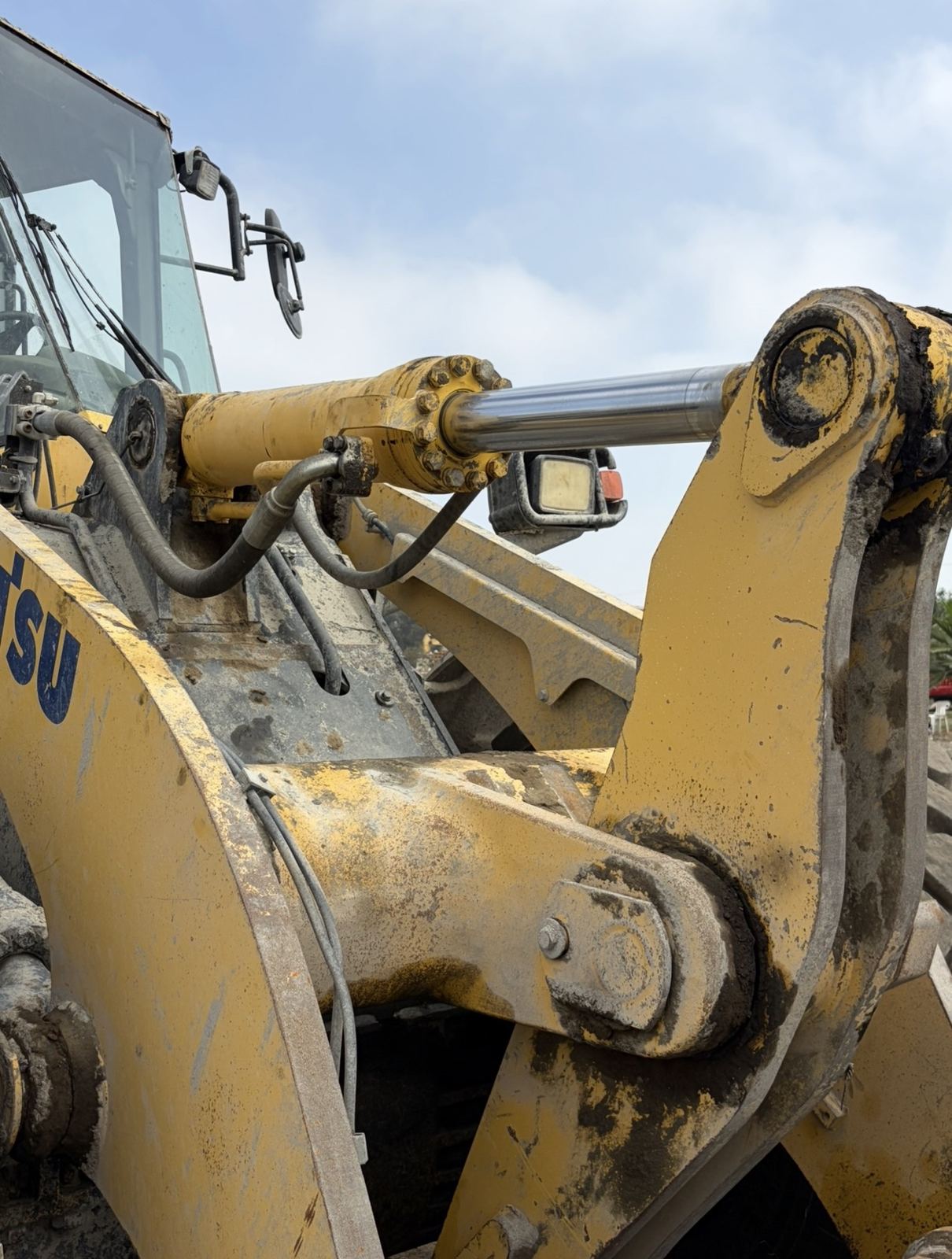
Oil appearing at a cylinder rod points at the gland area, and the things that matter, in order, are the condition of the rod surface, how the gland fits, and the state of the seal. Oil around fittings and hoses is usually a mechanical matter: a hose that has chafed through, fitting faces that are loose or damaged, or the wrong flare or O-ring. When oil escapes at a pump or motor shaft seal, the culprit is often case pressure or a worn shaft surface rather than a tired seal — swap the seal without fixing the cause and you have simply booked the same leak to return.
 Hydraulic Leak Diagnosis Guide · Fontana, CA
Sometimes there is no puddle at all, yet the boom drifts, the bucket slowly curls open, or the machine loses strength as it warms — that is internal bypass, where cylinder piston seals, a worn valve spool or a tired pump let oil pass without doing any work. A straightforward drift test plus flow and pressure checks will separate cylinder from valve from pump, which is exactly why diagnosis has to come before parts.
Nobody budgets for the contamination spiral: one component wears and sheds metal, that metal scores everything downstream of it, and what began as a single failed part ends as a full system rebuild. Keeping oil clean and acting early is the cheapest insurance a hydraulic system can have.
Every job follows the same route: it starts with your first call and ends with a component or machine that has been tested and put back to work.
Where it applies, we arrange to collect your equipment or component at no charge.
The unit is stripped down so the whole failure can be assessed properly.
We record the condition and everything we find, so the repair discussion rests on evidence.
Before any work goes ahead, we spell out what we recommend and price it for you.
Together we settle the scope, the urgency and the most sensible way forward.
Any part the job needs is machined, welded, rebuilt or reverse-engineered right here.
Nothing is released until its operation and the standard of the work have been checked.
The finished component or machine heads back to you, ready to go to work again.
A small external seep is something you can schedule around; an active leak, drift under load or metal showing in the oil means stop the machine and have it inspected. If you are unsure which you have, call and describe it — that conversation costs nothing.
Heat makes oil thinner, and pressure prises open seals and fits that are only just holding. A leak that shows itself under load is diagnostic gold, because it tells us precisely which circuit to test while it is hot.
Book a service visit or start a repair order
Tell us the make and model, what the machine is doing, where it is, how urgent the job is and when you would like us there. What you enter opens as a text addressed to John, so you can look it over before it sends.